
As a supplier of the 6026 electret microphone, I've often been asked about its performance under different sound levels, especially the distortion factor. In this blog, I'll delve into what the distortion factor is, how it varies with different sound levels for the 6026 electret microphone, and why it matters in practical applications.
Understanding the Distortion Factor
The distortion factor, also known as total harmonic distortion (THD), is a measure of the deviation of a microphone's output signal from the original input sound wave. When a microphone receives a sound signal, it should ideally reproduce it exactly as it is. However, in reality, the output signal may contain additional frequencies, known as harmonics, that were not present in the original signal. These harmonics are the result of non - linearities in the microphone's response, and the distortion factor quantifies the amount of these unwanted harmonics relative to the fundamental frequency of the input signal.
Mathematically, the distortion factor is calculated as the ratio of the root - mean - square (RMS) value of all harmonic frequencies to the RMS value of the fundamental frequency, usually expressed as a percentage. A lower distortion factor indicates a more accurate reproduction of the input sound, while a higher distortion factor means that the output signal is more distorted.
Distortion Factor of the 6026 Electret Microphone at Different Sound Levels
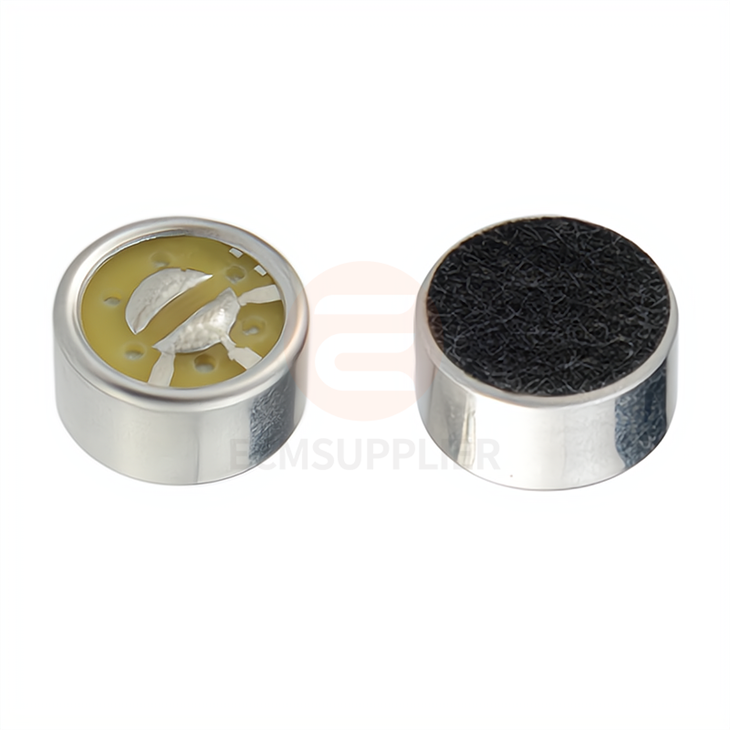
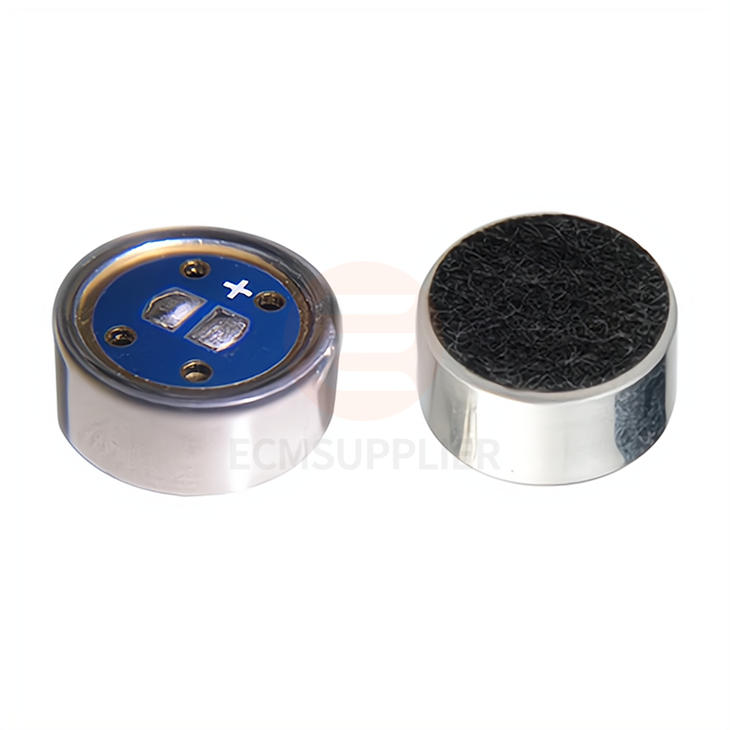
The 6026 electret microphone is a popular choice in many audio applications due to its compact size, good sensitivity, and reasonable cost. However, like all microphones, its distortion factor varies with different sound levels.
Low Sound Levels
At low sound levels, typically below 60 dB SPL (Sound Pressure Level), the 6026 electret microphone generally exhibits a very low distortion factor. This is because the microphone operates in a linear region where the relationship between the input sound pressure and the output electrical signal is relatively straightforward. The non - linearities in the microphone's components, such as the diaphragm and the pre - amplifier, have a minimal impact on the output signal. In this range, the distortion factor can be as low as 0.1% or even lower, making it suitable for applications that require high - fidelity sound recording, such as studio recordings and high - end audio equipment.
Medium Sound Levels
As the sound level increases to the medium range, around 60 - 90 dB SPL, the distortion factor of the 6026 electret microphone starts to rise gradually. This is because the diaphragm of the microphone begins to experience greater mechanical stress, and the pre - amplifier may start to approach its saturation point. The non - linearities in these components become more significant, resulting in an increase in the amount of harmonic distortion. In this range, the distortion factor may increase to around 0.5% - 1%. While this is still acceptable for many general audio applications, such as voice communication and consumer audio products, it may not be sufficient for applications that demand extremely high - quality sound reproduction.
High Sound Levels
At high sound levels, above 90 dB SPL, the distortion factor of the 6026 electret microphone increases more rapidly. The diaphragm may start to reach its physical limits, and the pre - amplifier may saturate, causing a significant amount of non - linear distortion. In this range, the distortion factor can exceed 5% or even higher, depending on the specific sound level and the characteristics of the microphone. This high level of distortion makes the microphone less suitable for applications that involve high - intensity sound sources, such as live concerts or industrial noise monitoring, unless additional measures are taken to reduce the distortion, such as using an attenuator or a limiter.
Factors Affecting the Distortion Factor
Several factors can affect the distortion factor of the 6026 electret microphone at different sound levels:
Diaphragm Material and Design
The diaphragm is a crucial component of the electret microphone, as it converts the sound pressure into mechanical vibrations. The material and design of the diaphragm can have a significant impact on the distortion factor. A high - quality diaphragm material with good elasticity and low internal damping can reduce the non - linearities caused by mechanical stress, resulting in a lower distortion factor. Additionally, an optimized diaphragm design, such as a thinner or more evenly tensioned diaphragm, can also improve the microphone's linearity.
Pre - amplifier Characteristics
The pre - amplifier is responsible for amplifying the weak electrical signal generated by the diaphragm. The gain, bandwidth, and linearity of the pre - amplifier can all affect the distortion factor. A pre - amplifier with a high gain and a wide bandwidth may introduce more non - linearities, especially at high sound levels. Therefore, choosing a pre - amplifier with good linearity and appropriate gain settings is essential for minimizing the distortion factor.
Environmental Conditions
The environmental conditions, such as temperature and humidity, can also affect the performance of the 6026 electret microphone. High temperatures can cause the diaphragm material to expand and change its mechanical properties, while high humidity can introduce moisture into the microphone, affecting the electrical properties of the components. These changes can lead to an increase in the distortion factor, especially at high sound levels.
Importance of the Distortion Factor in Practical Applications
The distortion factor is an important parameter in many audio applications, as it directly affects the quality of the reproduced sound. In applications such as music recording and high - end audio playback, a low distortion factor is essential for ensuring that the music sounds natural and free of unwanted artifacts. Even a small amount of distortion can make the music sound harsh or unappealing, especially in the high - frequency range.
In voice communication applications, such as telephony and video conferencing, a low distortion factor is also important for clear and intelligible communication. Distorted voice signals can be difficult to understand, especially in noisy environments. By using a microphone with a low distortion factor, the clarity and quality of the voice communication can be significantly improved.
In industrial applications, such as noise monitoring and machine condition monitoring, the distortion factor can affect the accuracy of the sound measurement. A high distortion factor can lead to inaccurate readings, making it difficult to detect and analyze the actual sound sources. Therefore, choosing a microphone with a low distortion factor is crucial for reliable and accurate industrial sound measurement.
Related Products
If you're interested in other microphone products, we also offer the 9750 Bidirectional Microphone Element and the 9750 Electret Condenser Microphone. These products have their own unique features and performance characteristics, and they may be suitable for different applications. For more information about the 6026 Electret Microphone, please feel free to contact us.
Conclusion
The distortion factor of the 6026 electret microphone varies with different sound levels, and understanding this relationship is crucial for choosing the right microphone for your specific application. At low sound levels, the microphone exhibits a very low distortion factor, making it suitable for high - fidelity audio applications. At medium sound levels, the distortion factor increases gradually but is still acceptable for many general audio applications. At high sound levels, the distortion factor increases significantly, and additional measures may be needed to reduce the distortion.
If you're in the market for a high - quality electret microphone and want to learn more about the 6026 electret microphone or our other products, please don't hesitate to contact us for a detailed discussion and to explore potential procurement opportunities. We're here to help you find the best microphone solution for your needs.
References
- "Microphone Handbook" by Günter Bergmann and Karlheinz Eitelschberger
- "Audio Engineering: Principles and Practice" by Glen Ballou