
Hey there! As a supplier of silicon microphones, I often get asked whether these little wonders are compatible with all audio systems. It's a valid question, and today, I'm gonna break it down for you.
First off, let's talk a bit about silicon microphones. These are MEMS (Micro - Electro - Mechanical Systems) devices. They're made using semiconductor manufacturing processes, which means they can be produced in large volumes at a relatively low cost. They're also small, have low power consumption, and offer good acoustic performance. Sounds great, right? But the big question is, will they work with every audio system out there?
Understanding Compatibility Basics
When we're talking about compatibility, we're looking at a few key aspects: electrical compatibility, mechanical compatibility, and acoustic compatibility.
Electrical Compatibility
Silicon microphones typically output an electrical signal in response to sound waves. The type of signal can vary. Some output analog signals, while others output digital signals.
Most modern audio systems are designed to handle both analog and digital inputs. For example, a high - end audio mixer might have both analog and digital input channels. So, if you've got an analog silicon microphone, you can plug it into an analog input on the mixer. And if it's a digital one, you can use a digital interface.
However, there are some older audio systems that might only support analog inputs. In this case, a digital silicon microphone won't work directly. You'd need a digital - to - analog converter (DAC) to make it compatible.
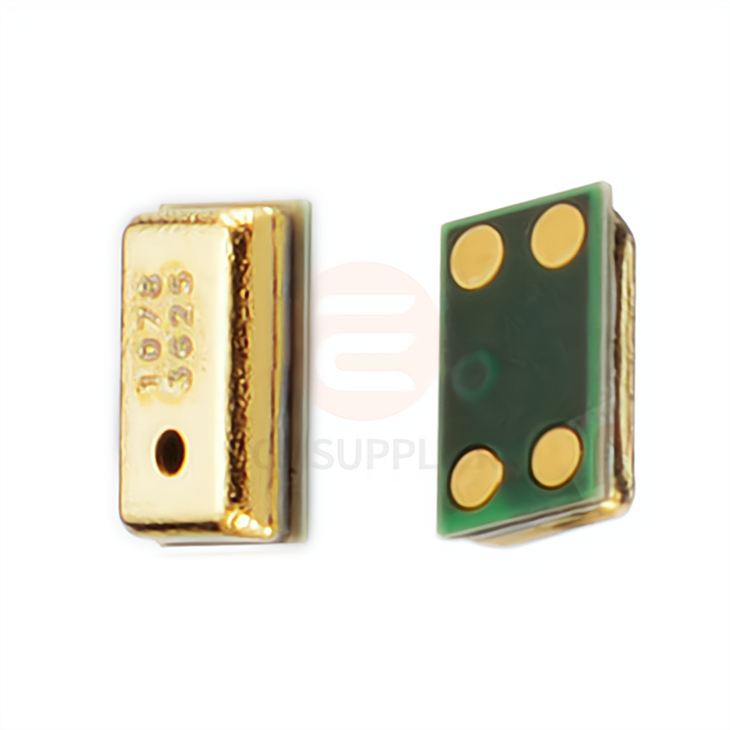
Let's take a look at some of our products. The 3729 Silicon Microphone Head MEMS is a great example of a high - quality silicon microphone. It has a very stable electrical output, whether it's analog or digital, which makes it easier to integrate into different audio systems.
Mechanical Compatibility
The physical size and shape of a silicon microphone matter too. Some audio systems have specific mounting requirements. For instance, a compact in - ear monitor might need a tiny microphone that can fit inside the earpiece.
Our 2718 Silicon Microphone is designed to be very small and lightweight. It can be easily integrated into small - form - factor audio devices like earbuds, smartwatches, and even some hearing aids. On the other hand, larger audio systems like professional recording studios might have more flexibility in terms of microphone size.
Acoustic Compatibility
Acoustic compatibility is all about how well the microphone's frequency response matches the requirements of the audio system. Different audio applications need different frequency ranges.
A music recording setup might need a microphone that can capture a wide range of frequencies, from deep bass to high - pitched cymbals. Our 3722 Silicon Microphone has an excellent frequency response that can cover a broad spectrum, making it suitable for music recording and live sound applications.
In a voice - only application, like a voice - activated smart speaker, the frequency range can be more limited. The microphone only needs to pick up the frequencies typically found in human speech. So, a silicon microphone with a more focused frequency response can work just fine.
Compatibility in Different Audio Systems
Let's dive into some specific types of audio systems and see how silicon microphones fare.
Consumer Audio Devices
Consumer audio devices like smartphones, tablets, and smart speakers are everywhere. These devices are designed to be user - friendly and often have built - in microphones. But if you want to upgrade or add an external microphone, silicon microphones can be a great option.
Smartphones usually have a standard audio jack or a USB - C port. An analog silicon microphone can be connected to the audio jack, while a digital one can use the USB - C interface. Since these devices are mass - produced, they're designed to be compatible with a wide range of input devices.

Professional Audio Equipment
Professional audio equipment, such as recording consoles, audio interfaces, and studio monitors, has higher standards. These systems are used for critical audio applications like music production, film sound recording, and live sound reinforcement.
In a professional recording studio, the audio engineers are very particular about the quality of the microphones. Silicon microphones are becoming more and more popular in this field because of their consistent performance and low noise levels. But they still need to meet the exacting standards of the equipment. For example, a high - end audio interface might require a microphone with a very low self - noise level and a flat frequency response.
Automotive Audio Systems
Automotive audio systems are a unique case. They need to work in a noisy environment, with vibrations and temperature variations. Silicon microphones are well - suited for this because they're robust and can handle these harsh conditions.
In a car, microphones are used for hands - free calling, voice commands, and even noise cancellation. The silicon microphones need to be able to pick up the driver's voice clearly over the engine noise and road noise. Our silicon microphones are designed with special algorithms to filter out background noise and improve the voice quality.
Limitations and Workarounds
While silicon microphones are very versatile, there are some limitations.
One limitation is the dynamic range. Some high - end condenser microphones can have a very wide dynamic range, which means they can capture both very soft and very loud sounds without distortion. Silicon microphones, on the other hand, might have a more limited dynamic range.
But there are workarounds. For example, you can use a pre - amplifier to boost the signal from the silicon microphone. This can help improve the dynamic range and make the microphone more suitable for a wider range of audio levels.
Another limitation is the sensitivity. In some cases, a silicon microphone might not be as sensitive as a traditional microphone. This can be an issue in very quiet environments. However, modern silicon microphones are getting better and better in terms of sensitivity.
Conclusion
So, are silicon microphones compatible with all audio systems? The answer is almost, but not quite. While they offer a high degree of compatibility in terms of electrical, mechanical, and acoustic aspects, there are still some situations where they might need a little help.
Whether you're a consumer looking to upgrade your smartphone microphone, a professional audio engineer in a recording studio, or an automotive manufacturer, silicon microphones can be a great solution. Our range of products, like the 3729 Silicon Microphone Head MEMS, 2718 Silicon Microphone, and 3722 Silicon Microphone, are designed to meet different needs and applications.
If you're interested in learning more about our silicon microphones or want to discuss a specific compatibility issue, feel free to reach out. We're here to help you find the perfect microphone for your audio system. Let's have a chat and see how we can work together to get the best audio performance.
References
- "Micro - Electro - Mechanical Systems (MEMS) Technology: Fundamentals and Applications" by Chang Liu
- "Audio Engineering Handbook" by Glen Ballou